Authentic Communication
Share ideas, preferences, feelings, questions, and needs in ways that work for the learner.
Social Skills · Authentic Communication
Respectful, individualized support for communication, confidence, self-advocacy, friendship, and participation in the moments that matter.
Learners building communication, confidence, and participation with others.
Tampa Bay, Florida. Group fit, setting, and current availability are reviewed before enrollment.
Ask about goals, grouping, schedule, and payment before a place is confirmed. Coverage & Payment.
A different measure of growth
Social growth is not about teaching a learner to look more typical. It is about helping them understand themselves and others, express what they need, navigate real situations, and build relationships that feel safe and meaningful.
At Divergent Trails, goals begin with the learner—not a checklist of how they are expected to appear. We honor different communication styles while building practical skills that can support friendship, collaboration, boundaries, problem-solving, and confidence.
Authenticity and skill development can exist together. A learner should gain more ways to communicate and participate without being asked to hide who they are.
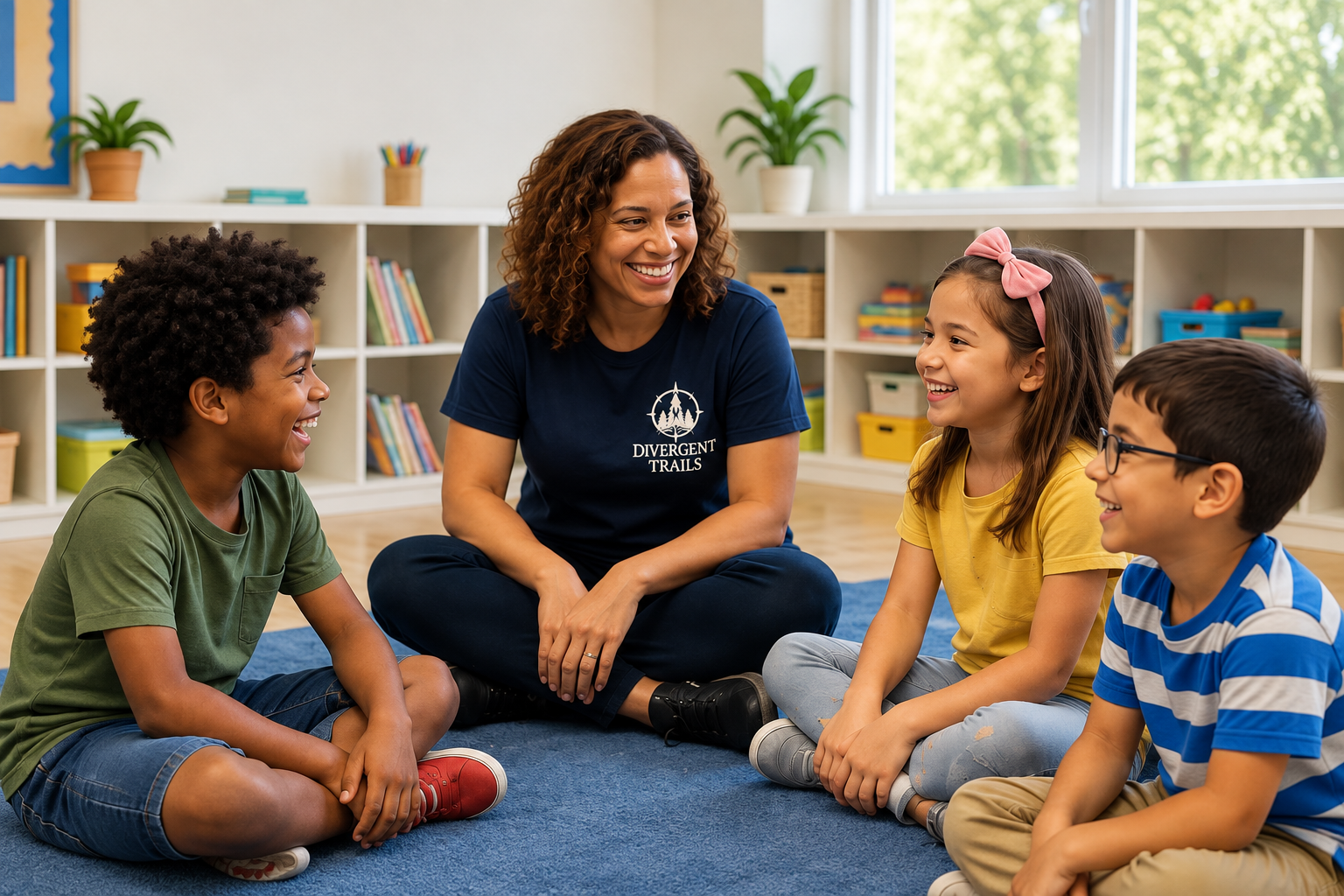
The goal is not to perform social behavior. The goal is to feel understood, capable, and more confident with other people.
Progress may look like speaking up, asking for space, finding shared interests, repairing a misunderstanding, or choosing when and how to participate.
Skills with a purpose
Priorities are individualized and may be practiced one-to-one, with peers, or in everyday settings when appropriate.
Share ideas, preferences, feelings, questions, and needs in ways that work for the learner.
Ask for help, say no, request a break, communicate discomfort, and recognize personal limits.
Explore connection, reciprocity, shared activities, and ways to begin or deepen relationships.
Notice context, interpret cues without rigid assumptions, and consider more than one point of view.
Work through conflict, misunderstandings, unexpected changes, and the natural bumps in relationships.
Build practical strategies for groups, community settings, school, activities, and new situations.
Respect comes first
We do not confuse compliance with connection. Skills should increase access, agency, safety, and quality of life—not simply make someone appear easier to manage.
Attention and engagement can look different from person to person.
Strategies should expand communication, not replace identity with performance.
Healthy relationships include consent, boundaries, choice, and the right to disagree.
How support takes shape
The path is adjusted to the learner’s age, communication, interests, strengths, environments, and priorities.
We begin with strengths, interests, communication, lived experiences, and the situations that feel important or difficult.
Priorities are connected to safety, relationships, participation, confidence, or self-advocacy—not appearance.
Skills are explored through relevant activities, interests, role-play, reflection, and real interactions when appropriate.
We help skills become flexible and useful across people, places, and situations without expecting perfection.
Social Skills Support
Support is shaped around the learner’s communication, interests, goals, and real-life environments.
Ask About Social Skills